GBV and where to get help

This publication highlights the widespread and complex nature of gender-based violence (GBV) in Kenya, particularly in informal settlements within Nakuru County. It reports that GBV, which includes physical, sexual, psychological, and economic abuse, disproportionately affects women and girls, with approximately 40% of Kenyan women having experienced intimate partner violence, and identifies root causes such as cultural norms, power imbalances, poverty, trauma, and limited access to justice and support services. It documents the impact of GBV on survivors, including mental health challenges, stigma, and barriers to reporting as well as provides information on where survivors can access medical, legal, psychosocial, and protection services, including toll-free helplines.
View in Pdf

You May Also Like

Nakuru Mental Health Action Plan Situational Analysis

Toward The Nakuru Mental Health Action Plan a Situational Analysis Report

Situational analysis, a formative research process, is an assessment of the current status and is fundamental to designing and updating national policies, strategies and plans (World Health Organization, 2018). A situational analysis was used to define the circumstances prevailing in the county including needs, opportunities, resources available, service provision, challenges, and barriers when seeking mental health services.

Read More »
OP ED The Hearders Approach Model in Peacebuilding

OP-ED on Herders Approach Model

Let the Herders Lead :
Why North Rift’s Peace Must Be Built from Within For years, the story of Kerio Valley in Kenya’s North Rift Region has been told through the language of crisis banditry, cattle rustling, displacement, and military operations. From the counties of Baringo, to Elgeyo Marakwet and West Pokot, communities have endured cycles of revenge driven by competition over water, pasture, and livestock. Successive governments have responded with crackdowns and security deployments. Yet despite these efforts, insecurity still persists.

Read More »
A MULTISECTORAL APPROACH TO VIOLENCE PREVENTION INFLUENCING POLICY AND PRACTICE IN KENYA

A Multisectoral Approach to Violence Prevention Influencing Policy and Practice In Kenya

The best definition of a multisectoral approach, particularly in the context of public health and violence prevention, is a deliberate, integrated collaboration among diverse stakeholders from various sectors such as government agencies, civil society, the private sector, non-governmental organizations, and communities to jointly address complex, interrelated challenges by leveraging their unique knowledge, expertise, resources, and perspectives for shared goals and sustainable peace and security outcomes.

Read More »
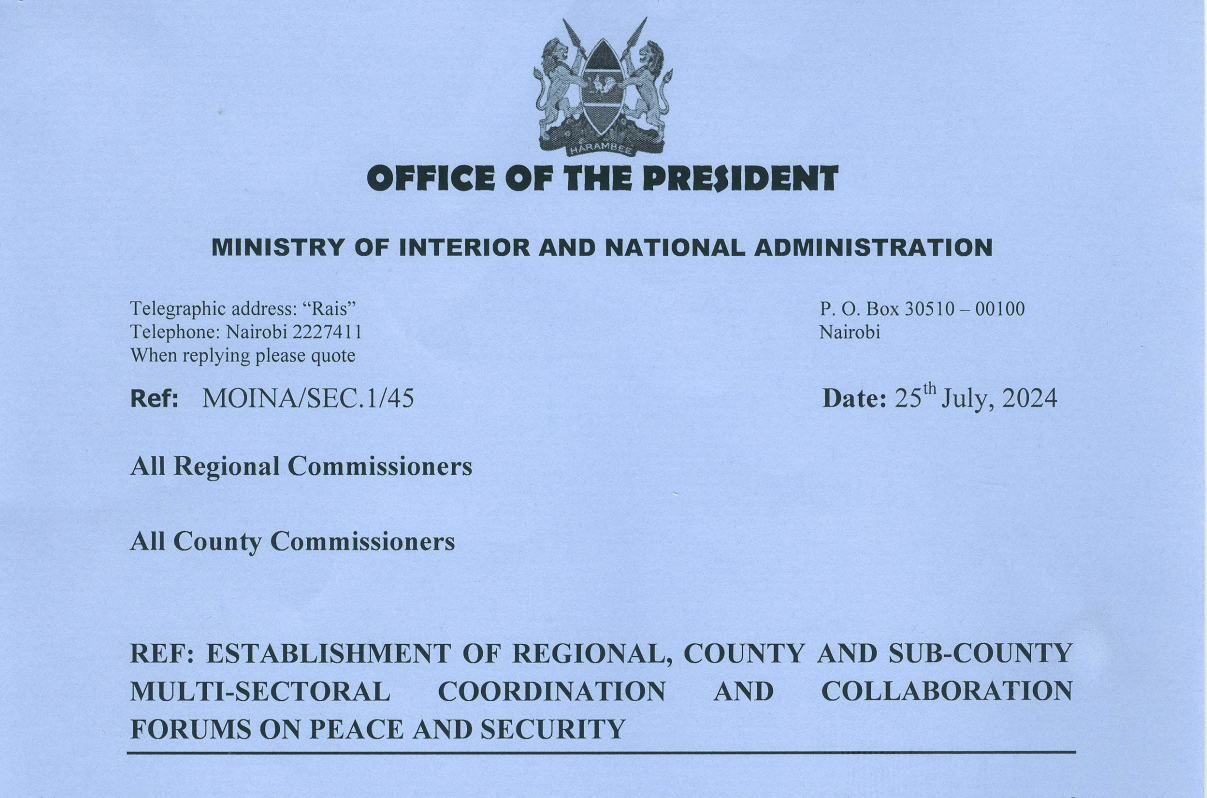
PRACTICE BRIEF NO 1 OF 2025 : Operationalizing and Institutionalizing of the Multisectoral Coordination and Collaboration Forums on Peace and Security in Kenya

PRACTICE BRIEF NO 1 OF 2025 : Operationalizing and Institutionalizing of the Multisectoral Coordination and Collaboration Forums on Peace and Security in Kenya

This practice brief looks at the historical context that necessitated this policy change, examines the implementation framework of the MSF model, presents key findings and best practices from its pilot phase, and conclude with evidence-based recommendations for its successful national scaling. This analysis therefore begins by examining the historical context of conflict that rendered previous security strategies obsolete and created the imperative for this fundamental policy shift.

Read More »